Tom Stock

Poet, Essayist, Photographer, Naturalist

Jessup Neck Ramble

Mark and I set out to circle Jessup Neck in Sag Harbor. We parked at Morton Wildlife Refuge. This refuge is famous for the “bird in hand” experience. Mark brought a bag of bird seed. We paused on the trail while Mark held out his hand with a palm of bird seed. Moments later, we heard chickadee calls from nearby shrubs. Instantly, one landed, grabbed a sunflower seed and was off. We saw a sign that requested “Dropping seed invites unwanted animals (rats). Please put unused seed in a bird feeder near the entrance.” This illustrates how humans are part of the food chains and webs of nature.

A chain from forest, to chickadee, to sunflower seed, to us, to rats, is but one of hundreds of interconnected links of which we are a small part… On our return, while Mark took photos, I sat on a bench and tried attracting some birds. Chickadee and titmouse responded. I did not look but felt their tiny talons grasp the edge of my palm. I heard their wing flaps up close.  We travel to see wildlife, and they come to us, ambassadors for birds and all animals.

Rethink

Twenty years ago, there were three environmental “R’s”; Recycle, Reduce, Reuse.

Recently a fourth “R” has become an upgrade to the first three; Refuse. At the checkout counter at Best Market, the clerk asked me “Do you want plastic bags” I was pleasantly surprised. I see clerks spreading open empty plastic bags for the next customer. The fifth “R” is Rethinking. I saw the word used on a Face book page of Carl Safina. It had me thinking, oh wait, Rethinking.

Recycling has reduced the refuse stream but, recycling implies that we keep consuming recyclable items. Reduce means consuming less recyclables. Reuse also falls into this category. All of these first four, have awakened us all that we have to cut back. Cutting back is a rethink.

At 7-11, I noticed five cars parked in front of the entrance all idling. The mindset is…”I’m only going to be a few minutes, why turn off the engine.” I turn mine off, and often bicycle to the store. Here is a major rethink that ascends to the corporate level. How do I rethink a policy to stop the idling? I’d start by communicating my concern. Gas is being wasted. Air is being polluted. Here is a chance for 7-11 to rethink. If this fails, I have to persist. Arrange a meeting with the manager of the store. Ask for their bosses, work my way up to the top level and CEO. I did this.

To rethink is to evolve, to make a midcourse correction. Radical rethink, micro rethink, it’s all good. Don’t hold that thought…rethink it. The little things to rethink are personal habits we have developed. Some of these fall into the five “R’’s”

When I wash my hands in a sink, I shake off the water enough so I don’t have to use a paper towel. This little thing is a rethink.

“Taxing a behavior tends to reduce it.” (“Faced with a new tas, Berkley Drinks Less Soda.” New York Times 8-25-16. All of us buy garbage. Packaging becomes garbage. For example. We made franks for supper and tossed out the plastic wrapper. Which goes into the trash can, into the garbage truck, and ultimately into a land fill. To rethink this chain is to try something new. Where to break the chain. I could go to a meat store and buy franks with paper wrapper. At least paper decomposes. A good, healthy tax on the second    can of garbage will have people trying to compact, reduce, rethink. Perhaps use bigger garbage cans, perhaps dumping in a vacant lot.

For rethink to become a reality, even on a community level, will probably take decades. Rethink can lead to substantial change. Ultimately, rethinking all six major institutions has to happen to begin to save our oceans, our land, our biota, us:

Financial; Education; Health; Legal; Political; Environmental

John Muir reminds us “When one tugs at a single thing in nature,one finds it connected to everything else.”

Let’s start in our own world. Find something you do, rethink it, see what  happens, one finds it attached to the rest of the world.”

If any major rethinks occur in any of the above institutions, the reverberations with be seismic!
 

Double-D Where Farm Animals escape Slaughter & Abuse

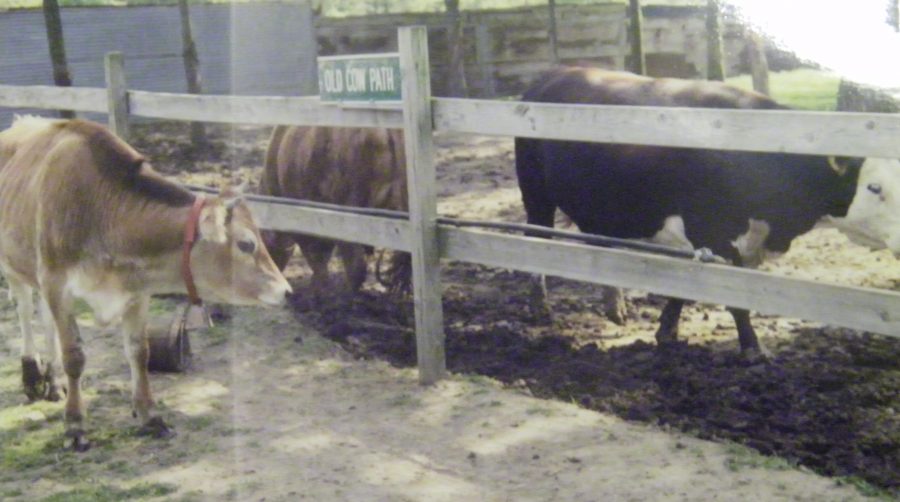
Richard and Gay Devoe run a Sanctuary for abandoned and abused farm animals. They call it the Double D Bar Ranch. It is located on Wading River Manor Road in Manorville, just north of exit 57 of Sunrise Highway, Suffolk County, and Long Island. I met Richard in the winter of 2001. At that time, he and his wife were taking care of 700 animals. He accepted animals that needed care, feeding, and a home. He and his animal oasis deserve not only a visit, but a contribution. They are always in debt because the e animals come first. Although Richard seems to know more than most vegetarians, he’ll pay any amount to have surgery or any other procedure on any animal that needs it. I have nothing but the highest respect for Richard and Gay who dedicate their lives to save and love the animals they take in.

The farm started with an abandoned roadside cat. Richard pulled over and Gay scooped up the cat. Richard grew up in Babylon Village and took care of horses at a nearby stable, then learned how to ride. Soon after, they bought 4 acres in Manorville and began a nonprofit organization to accept animals. I volunteered and was with the ranch for three years off and on. At the beginning, Richard needed a friend. Gay went to work each day; Richard alone fed and watered the animals. Our friendship morphed into helping a man I fully admired. I wanted a fraction of the satisfaction he gets for rescuing pain, fear, and hunger from unwanted animals.

One Century Ago Today: August 25, 1916 – August 25, 2016

Our National Parks were founded one hundred years ago today. Teddy Roosevelt signed into law what has become “our Nations greatest idea.” Parkland, open space, remarkable beauty, cliffs, mountains, prairies, rivers, and wonders all around for all of us to enjoy.

In 1964, Lyndon Johnson added National Seashores to the growing list of places. In the summer of 1987, I signed on as a NPS Seasonal Ranger at Fire Island National Seashore. I was in a funk – midlife crisis at the time. Fire Island got my out of that real fast.

When I started, my uniform had yet to arrive. Allison broke me in. I quickly learned that there was a form for practically anything. The visitors center is two stories high. The building was moved from a private home owned by the owners of Budweiser Beer Corporation. They donated the building to the National Park Service. It was set on a barge and floated east in the Intercoastal Waterway. The balcony offered 360 degree views.  My role was to present the image of the National Parks.  I assumed this image the day my uniform arrived.

Jam

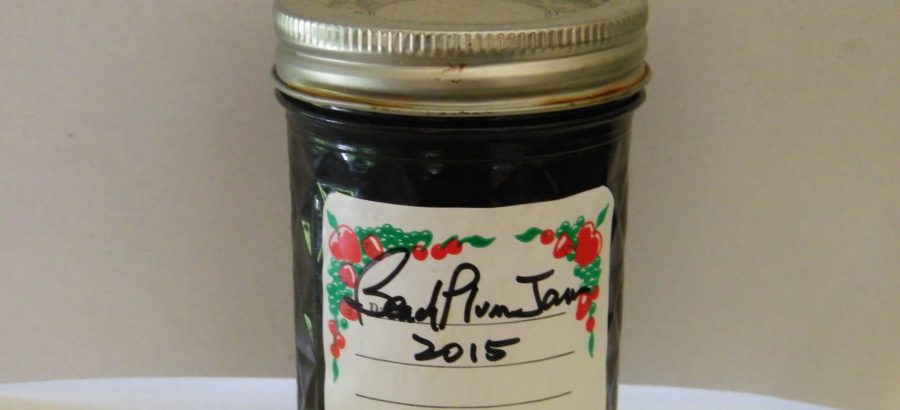
Nancy, the wife, likes to make jam. I go along with this because of step one…collecting the fruit. This means going to our favorite, secret place.

We arrive with buckets and find bushes of beach plums on a sandy beach swale. Beach plum shrubs here have some of the largest fruit I’ve ever seen.

The shrub blooms in May at the same time that spring warblers arrive. The shrubs look like they are covered in white, dense foam. The warblers are feasting on ants that crawl up the trunk and branches to feed on the nectar. The small numerous flowers follow one of the laws of nature – over production. Many flowers are never pollinated. Sometimes a heavy rainfall just at blooming time results in less beach plums in the fall. The warblers in turn, feed on the ants. Having migrated thousands of miles from their winter quarters, they are famished. Presto, they find beach plum shrubs as their rest stop and feeding trough.

Good Vibes

A single vibrating string is echoed in a movie. A slow stroke on a cello’s base string  created sound vibrations to accompany a movie scene. That resonance stayed with me long after the movie ended. Notes such as that suggested a foreboding event about unfold. Particular frequencies of piano, cello, and bassoon evoke emotions for me. These vibrations bring up feelings that quickly rise in my chest. I gasp to try to hold back tears. Why do musical vibration create this uncontrollable upwelling?

I have always been interested in how the background affects the foreground. Many collage pieces prove this. ( a sample accompanies this). I take away the busyness of a background to focus the viewer to the subject. The same holds true for photography. Choosing the background is as important as the subject. The background enhances the subject. That cello note vibrates right into my brain and releases a powerful feeling. I felt overwhelmed for a moment. It was a perfect communion of movie subject and music, combined to create a strong reaction.

How To Make a Basket

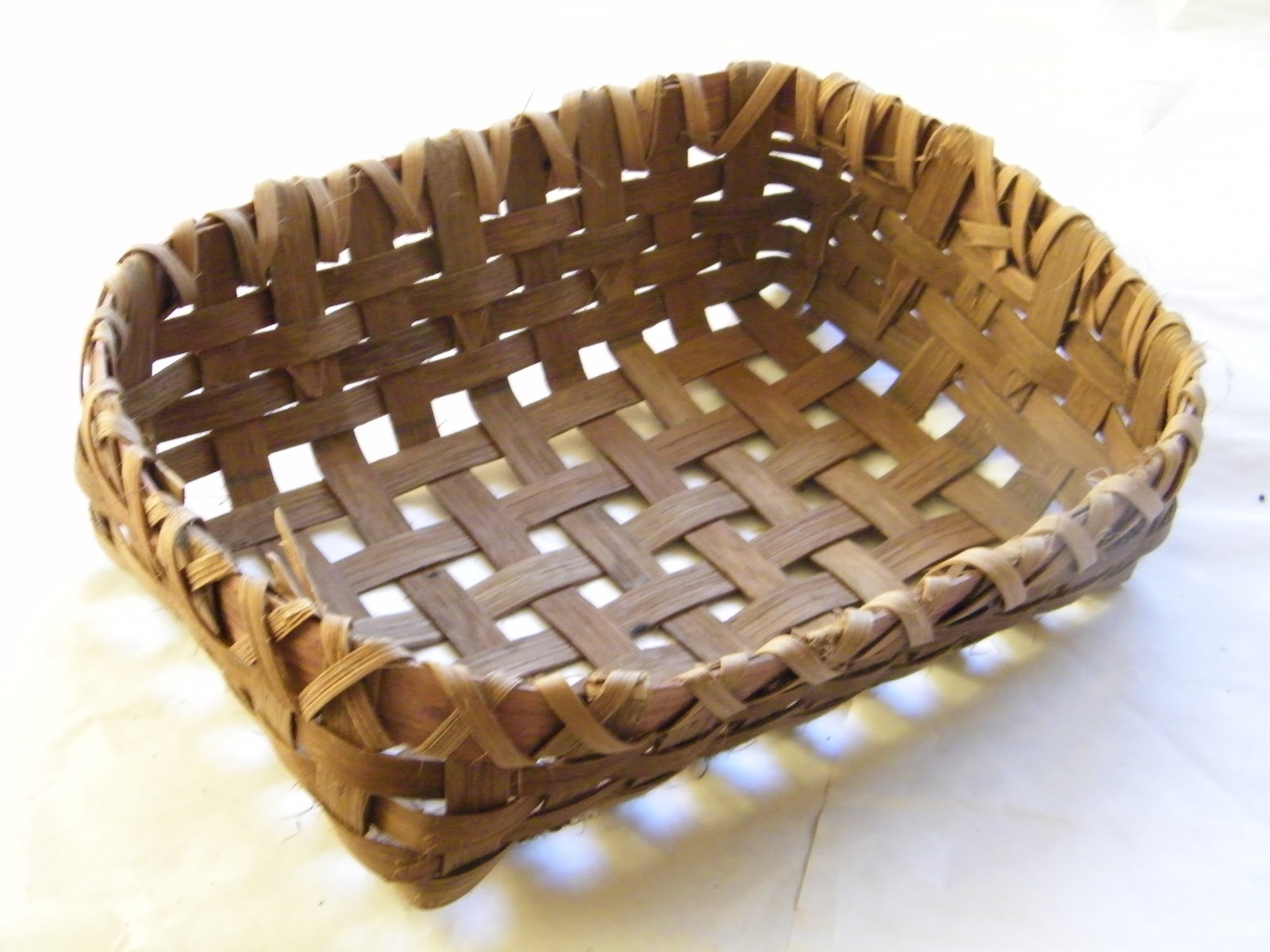
The tuck is the secret to making a strong rattan basket. Tuck is the verb which means pushing the end of a rattan strip under another. This takes care of loose ends, and tightens the basket.

  1. Wet rattan strips for a half hour for flexibility
  2. Plan the basket by selecting a small oblong wood box
  3. Use this wood box form to set up strips that criss cross on the bottom
  4. Staple each strip and leave about 6 inches spare over the box edge
  5. These will become the tuck strips
  6. Weave strips criss-cross on the bottom
  7. Firm the bottom edge with a strip weaving in and out horizontally
  8. Weave the sides until you come to the edge.
  9. Create a rim using strips outside and in
  10. Cut off inside vertical strips and leave the outside strips
  11. Point the outside strips with scissor cut
  12. Bend outside strips over the rim and tuck using an awl
  13. Place rattan inside and outside the rim and use thin rattan

The last operation is to”sow” the in and out strips to the vertical

  1. The rim holds the whole basket together and provides a decorative edge
  2. Tools are a staple, awl and scissors and a wood box
  3. Making a basket strengthens fingers and prevents arthritis.

Each finger slowly learns until all fingers develop brains. See photos to accompany this instruction sheet. Contact me if you need help.


Hedge Bindweed – Boots-On-The-Ground Research

Hedge bindweed flowers attract me with pink-white light against a green privet hedge.. Its five fused petals look like   the horn of a trumpet. On a whim, I decided to have a closer look. First off, it was mid-morning and very warm. A haze of insects from large to small hovered above dozens of flowers. Hedge bindweed is a twisty vine that takes advantage of the strong straight privet branches. Here I had a perfect laboratory for observing. I decided to pretend I was a bumble bee.

The flowers face the sun. A bumble bee landed on the edge of a flower. The flat shape of the flower made a perfect runway. The bee quickly dove into the throat as deep as it could go. I assume it was sipping nectar. For many plants, August is the apex of nectar production. Insects can smell molecules of nectar that flourish above the flowers. I quickly concluded why this bee is called “bumble”. To use another word, it clamored, wings still, but abdomen vibrating, legs moving. Its exit was bumbling as well, it backs out, then turns, alights, on to another flower. As it flew, I saw a yellow lump on its leg. This is a pollen sack. The bee gives and takes pollen in exchange for nectar a win-win situation. Seeing this, I extrapolated. All nature relationships are win-win. It isn’t just take, it isn’t just give. It’s both. That’s why ecologists use to term food chain and food web. I was seeing this first hand.

The Drought

A rain gauge attached to a pole at Homecoming Farm has been empty for months. “Without our drip irrigation, our share holders would have practically no produce.” Farmer Don said. I’ve seen beech tree leaves that are brown around the edges. This is a sure sign that we are in a drought.

“With a slow drip through pinholes in plastic tape-hose, our produce is fine.” Don turns the water on and off in a regular pattern to protect and conserve. The soil gets wet deep down with the drip system. Not only do the tomatoes benefit, but weeds do as well.

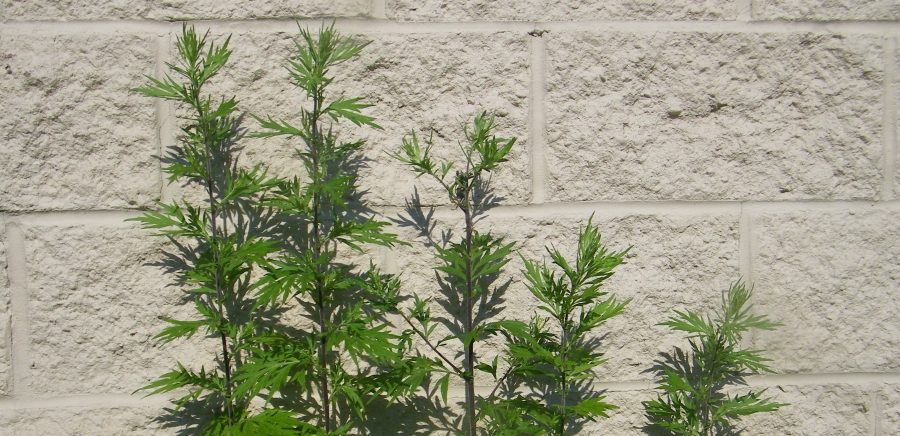
Many weeds, however, do just fine during a drought. Ragweed, crab grass, pig weed, mile-a-minute, foxtail grass, evening primrose, pokeweed, and spreading  purslane thrive. Weeds know about drip irrigation. They are thriving right next to  growing produce. They are stealing water. Many weed seeds can lay dormant for years until the right conditions prevail. They move in between the good guys and grow extra fast.

By August, weeds are winning. At the beginning of the season, most work-share members are weeding. This is cheap meditation. The task requires is boring which allows room for a brain to wander, imagine, and  create. Many weeders like to have a companion or two to socialize.

Homecoming Farm – Mid August, 2016

Nancy and I are work-share members of the Homecoming farm in North Amityville. Tuesday mornings we arrive to fulfill our two hours of work in exchange for a bag of produce.

Harvesting was in full swing as we arrive. We were asked to pick beans. Don the farmer explained how. “Don’t pull weeds near the beans. Their roots are sensitive and will curtail bean production. Don’t yank the pods off. Instead cut them off gently.” We too shears and plastic buckets into the field. Although it was hot, a strong breeze cooled things off.

Harvesting beans is tedious with Don’s suggestions. I’d rather yank them off. Instead of cutting I found a way to extract the bean without cutting. I nipped it off with thumb and index finger. Many of the beds are choked with weeds. Other workers weeded. With the drought, weeds are difficult to pull. I tried kneeling and stooping and sitting. All three positions were difficult. After 45 minutes, I quit. Sore back, sore knees, thirsty, bathroom break, and frustration did me in.

Page 22 of 30

Powered by WordPress & Theme by Anders Norén