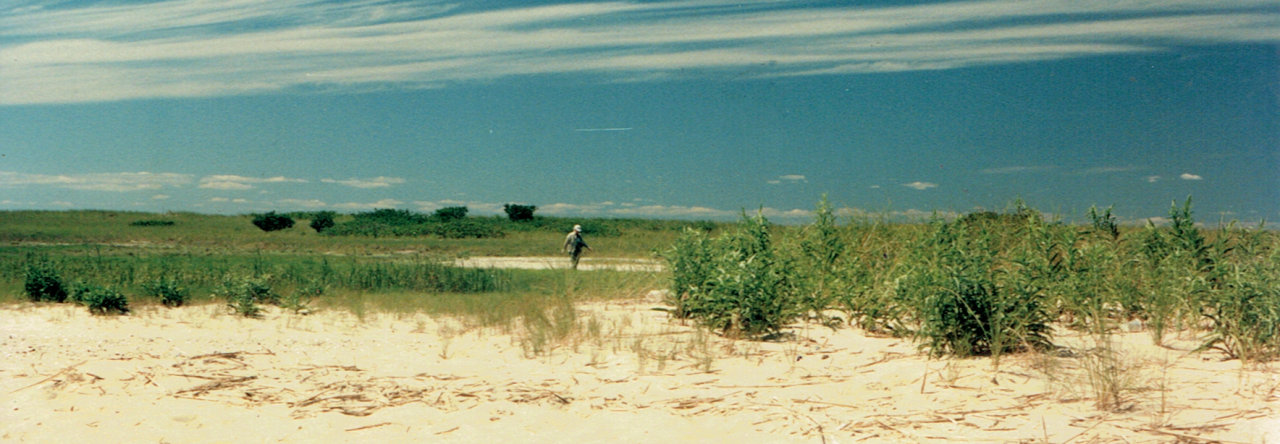
Long Islands’ soil started with glaciations. Two moraines were deposited (the hills that go ‘round the world) by a huge continental glacier some 20,000 years ago. Geologists call these hills terminal end moraines. As a glacier retreats, all the rock material it carries is deposited by melt water that flows south of the ice front. When the glacier is stationary, it acts like an escalator bringing rock material (with particle sizes anywhere from clay to huge boulders) to the ice front. It is dumped there and piles up creating mounds called moraines. The moraines act as dams for melt water creating areas where sediments have time to sort themselves out which create distinct layers of sand and clay . The moraines are deposited rather quickly and because of this, rock matter doesn’t have enough time to be sorted out. Sorting is the process whereby particles of similar size and density “condense” in layers. Outwash plains are the flat, gently sloping areas south of the moraines. There are two major outwash plains on Long Island, the Hempstead and Terryville Outwash Plain. These are delta-like formations that form slowly as melt water carries rock material southward. Glacial drift is term used for the unsorted mixture of rock matter in the moraines. It is unsorted with a large spectrum of particle sizes. This is not so in the outwash plains where particles have a chance to layer and be sorted out by sheets of slowly moving water that eventually formed into streams that have coursed along for centuries creating dentritic drainage patterns all across Long Island.
We’ve got plenty of space
It’s a great shopping place
It’s the workers – they smile
That makes it worth while
The cashiers are smart
Make it hard to depart
Hear music and shop
All departments tip-top
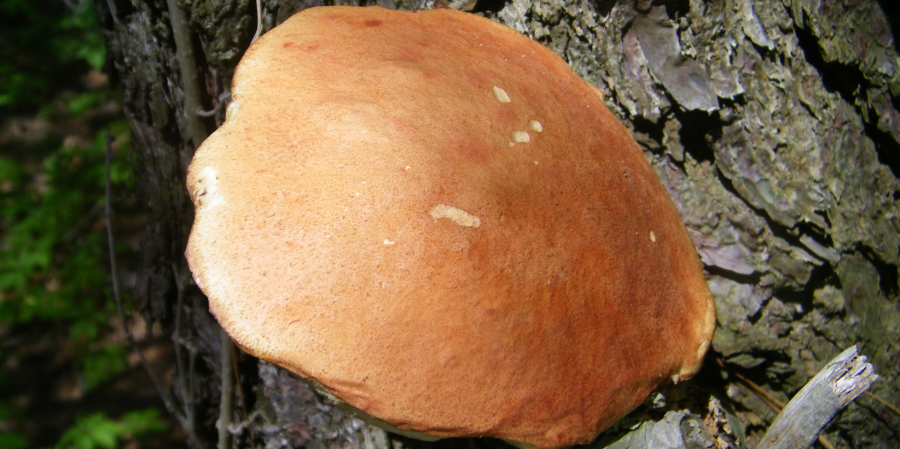
The late Bob Laskowski was so admired by the Great South Bay Audubon Society that a plaque hangs on a wall on their Sayville club house. In addition, the club named a winter birding expedition after him…the Bob Laskowski Waterfowl Count.
I met Bob in Central Islip in the late 1970’s. He was working at the Agway store on Suffolk Avenue in Central Islip. We started having conversations about birds and conservation issues. I concluded that he was a major player for his knowledge and experience with the natural world. He is credited for the discovery of a huge American Crow roost in Nesconsit, He found a rare green snake somewhere in Central Islip. He discovered a globally rare flower called Sandplain Gerardia in Sayville.
 George Wallace writes poems from the sweat lodge of experience. Within his poetry, he chants and serves up incantations. The Jack Kerouac beat/Bebop has infiltrated every neuron of his brain.
He chants in A SIMPLE BLUES WITH A FEW INTANGABLES with well-placed repetition as in “all night long and old chords and no chords.” His frequent repetition moves the poems along. They are fun to read and to listen to.
In OCTOBER RUNS LIKE A BE-BOP SHAKESPEARE more chants…”Let’s go spittle to mole, mole to molecule, man to man, cloud to toe and back again.” Here is a food web with words that feed on each other. Now George is on a vision quest leaving the city to go “upcountry.”

- Obtain a whole fish from 6 – 10 inches
- Either freeze the fish for later or make the print right away
- Thaw the fish, lay it on newspaper, wipe the slime off with a paper towel
- Newsprint pads come in small, medium and large. Decide on the size you need beforehand. Newsprint is very absorbent.
- Buy a jar of soluble block printers ink from an art store
- Using a one inch brush, take a small amount of ink and dilute it with just a few drops of water. Mix with the brush.
- Spread the ink on the fish backwards to insure that it seeps under the scales. Make sure you prop up the dorsal fin using a crumpled piece of paper towel. Stuff crumpled paper town in the mouth
- Apply a light coat of ink EXCEPT the eye. Fill in the eye later.
- The first print is a test to see how to make adjustments in the ink solution. It may take several tries to learn the skill of inking
- Do not put thick ink on the fish. It must be thinned.
- Number each test print and keep making prints, and reapplying ink until you see that you’re getting the details of the fish. The head is bony and ink doesn’t seep in so less is better.
- After the paper has been laid on the inked fish, gently touch the paper with one hand and with the other make sure the paper doesn’t move.
- Eventually, using fingers and thumb, make sure the entire fish has been touched. Apply gentle pressure. Make sure you get the dorsal and tail fins.
Part 1:
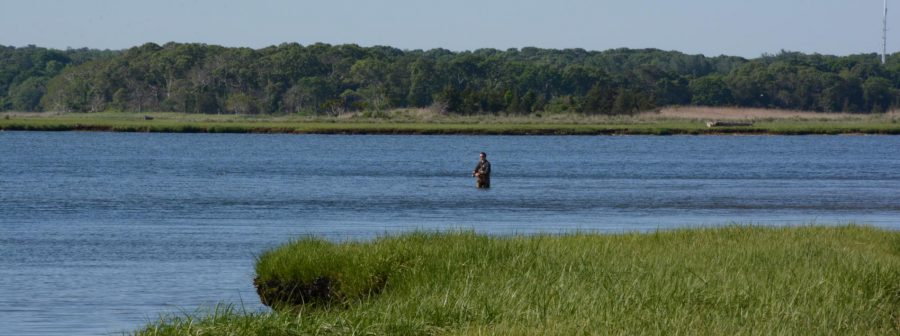
Dead moss bunkers also called Menhaden on a small stony beach on the Peconic River Estuary. Three men, a truck and trailer, and a boat full to the brim. They arrived at 4:30AM from Eastport to catch Menhaden, thousands of bunker to sell them in Huntington.
They set a 150 long seine net using the boat. Huge schools of Menhaden had assembled there as they have done for thousands of years. The fishermen knew this. They have a very small window of opportunity.
Laughing gull calls / wind passing through poplar tree leaves / mourning doves in the early morning / song sparrows while I work in the garden ‘ spring peepers across the street from my Manorville home / crickets at dusk / Screech and great horned owls calling at 3AM / breaking waves lapping and crashing /wind clicking tall dry grass / wind passing through pitch pine needles /osprey overhead / gurgling water beneath the hull of a small sail boat / chickens clucking at egg laying time /spouting whales as they surface / frog calls – green and bull / a swan flying by /wing beats of the Ruby-Throated Hummingbird / wood thrush calls early morning deep in the pine barrens / herring gull calls / great blue heron taking flight / catbirds, veery’s, fish crows, American crows / the oven bird high in a tree canopy / house wren and northern oriole / honking Canada geese / piping plover peeps / screech of two touching tree trunks / the wining wind seeping through cracks in my man cave / the faint snap of a wisteria pod opening / sifting compost through a screen / crunch of gravel stones as I hike uphill on a well—worn trail in Manorville Hills / thump of large, green black walnut tree nut hitting the ground / in early spring, robins in early dawn / a rock avalanche on Lyell Canyon, Yosemite National Park / crinkly of dry corn leaves / hairy woodpecker hitting a hollow tree branch
Notes from a friend:
 I met him in 1975 at Sunken Meadow State Park. We were conducting a teacher’s workshop on using the outdoors. Max was doing poetry, I was doing math. He heard me call “Look, there’s a cardinal.” Ever since then, he labeled me as the person who invented the “teachable moment.” “Thomas Allen Stock writes about nature and love of the outdoors, an educator who stops everything for the teachable moment.” Letter, September 1992
He was always a reporter, once told me “Everybody has a story.”
His father was a reporter. Max became a reporter in Geneva , New York
He attended Hobart College and met Virginia while sailing on Seneca Lake
He joined the Marines and received an accommodation for apprehending an intruder while he guarded a naval shop.
The sore thumb is an isthmus of sand and scrub on the north side of Fire Island Inlet. It is a favorite beach buggy spot where surf casters fish. On the north side of the thumb, a charming cove with flat water.
I started my walk from the Overlook, a Babylon Town Beach. My plan was a circular…east to the tip of the thumb, then along the sand road to Ocean Parkway, then west back to the Overlook.

A three-time United States Poet Laureate, Robert Pinsky visited the Walt Whitman Birthplace to perform duties as Poet in Residence…Poetry Master Class, Reading, and presiding at the awards ceremony for student poets.
It is one thing to read his biography on the flier, quite another to meet him, hear him teach, listen, comment, and recite and read. Almost 25 poets gathered to work with him. It was fabulous.